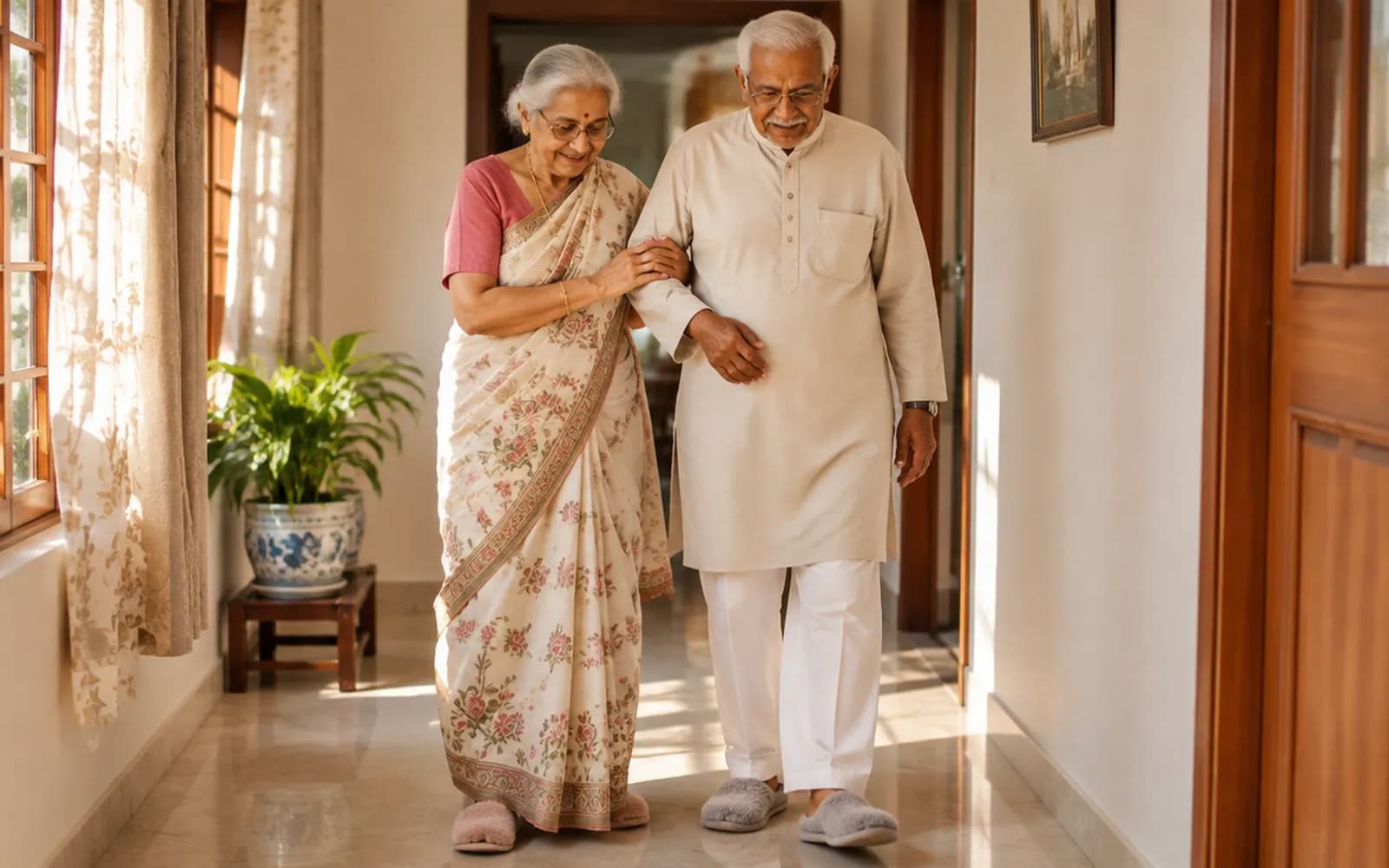
For older adults, the home is where most falls happen — on the bathroom tile, the kitchen floor, the steps at the door. Falls are a leading cause of injury in older people worldwide, and the footwear on their feet is one of the few risk factors that the family can change in a day.
This guide explains how to choose slippers for the elderly that are comfortable, secure and non-slip, what to avoid and which options we recommend.
Why footwear matters for fall prevention
With age, balance, muscle strength, reflexes and foot sensation all decline. Add a slippery floor and a loose or worn-out chappal, and a small slip can turn into a fracture. Good slippers help by:
- Gripping the floor with a textured, non-slip sole.
- Staying on the foot so the wearer does not have to scrunch their toes to hold it.
- Cushioning the feet, which reduces tiredness.
- Protecting from sharp objects and hot or cold floors.
See our broader guide on footwear for elderly parents.
7 features of a safe slipper for seniors
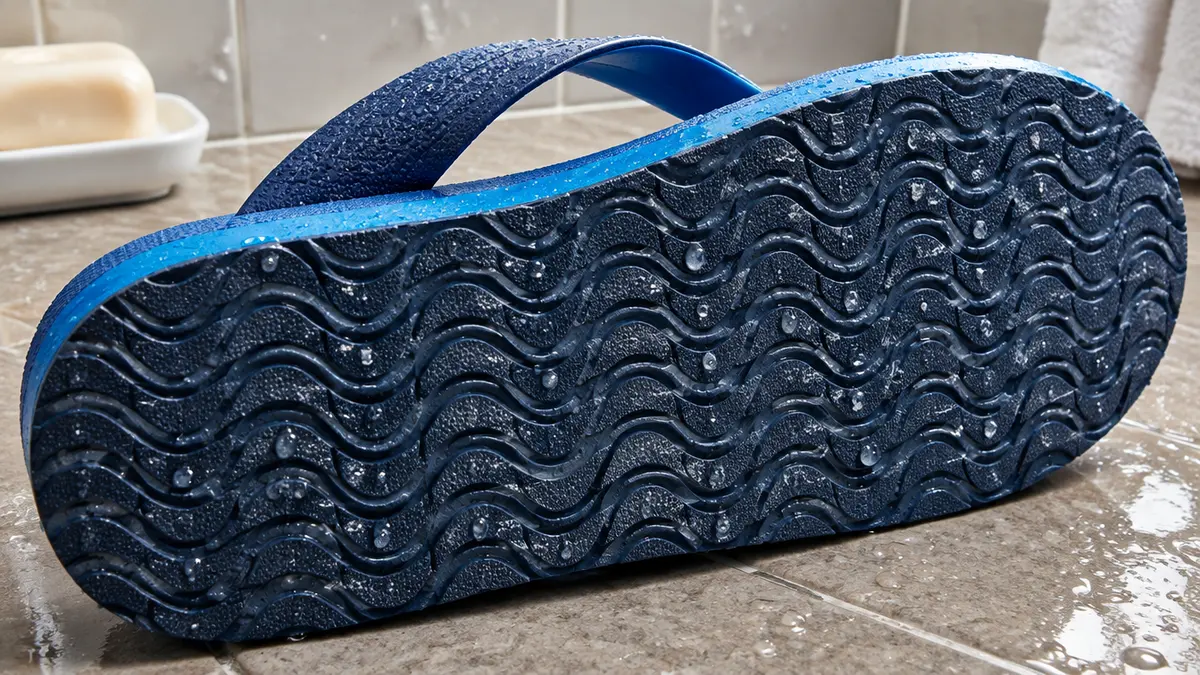
- An anti-skid sole. A deep, textured pattern that grips wet tiles.
- A secure fit. A strap, cross-band or enclosed design that holds the foot — not a loose flip-flop that flaps.
- Light weight. Heavy slippers make it harder to lift the feet.
- A cushioned footbed. Reduces joint strain and fatigue.
- A low, flat sole — thick platform soles can feel unstable.
- Easy to put on. A wide opening and an adjustable strap, see velcro sandals for the elderly.
- Room for swelling. See footwear for swollen feet.
What to avoid
| Avoid | Why |
|---|---|
| Smooth rubber or plastic chappals | Slip easily on wet floors |
| Worn-down soles | The grip has gone |
| Loose or backless slippers that slap | Easy to trip on |
| Socks alone on tile or marble | Very slippery |
| Slippers that are too long | The toe catches on the floor |
| Heavy platform soles | Unstable and tiring |
Our recommended slippers for the elderly
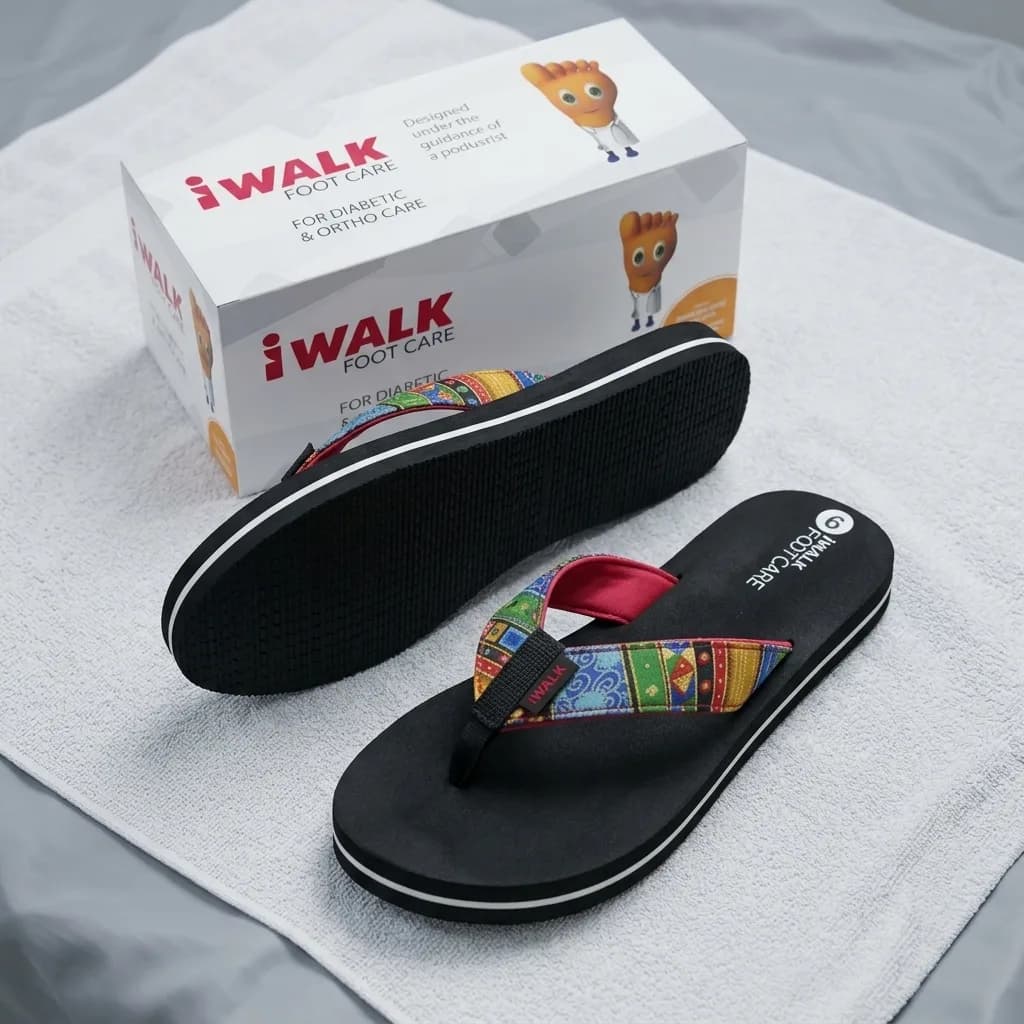
- AJM 810 — ₹700. An orthopedic flip-flop with a lab-tested, anti-skid EVA sole and a 12mm arch-support MCP footbed. Navy Blue, Red and Royal Blue.
- AJM 800 — ₹700. An orthopedic flip-flop for men with a non-slip sole and an MCP footbed that spreads pressure.
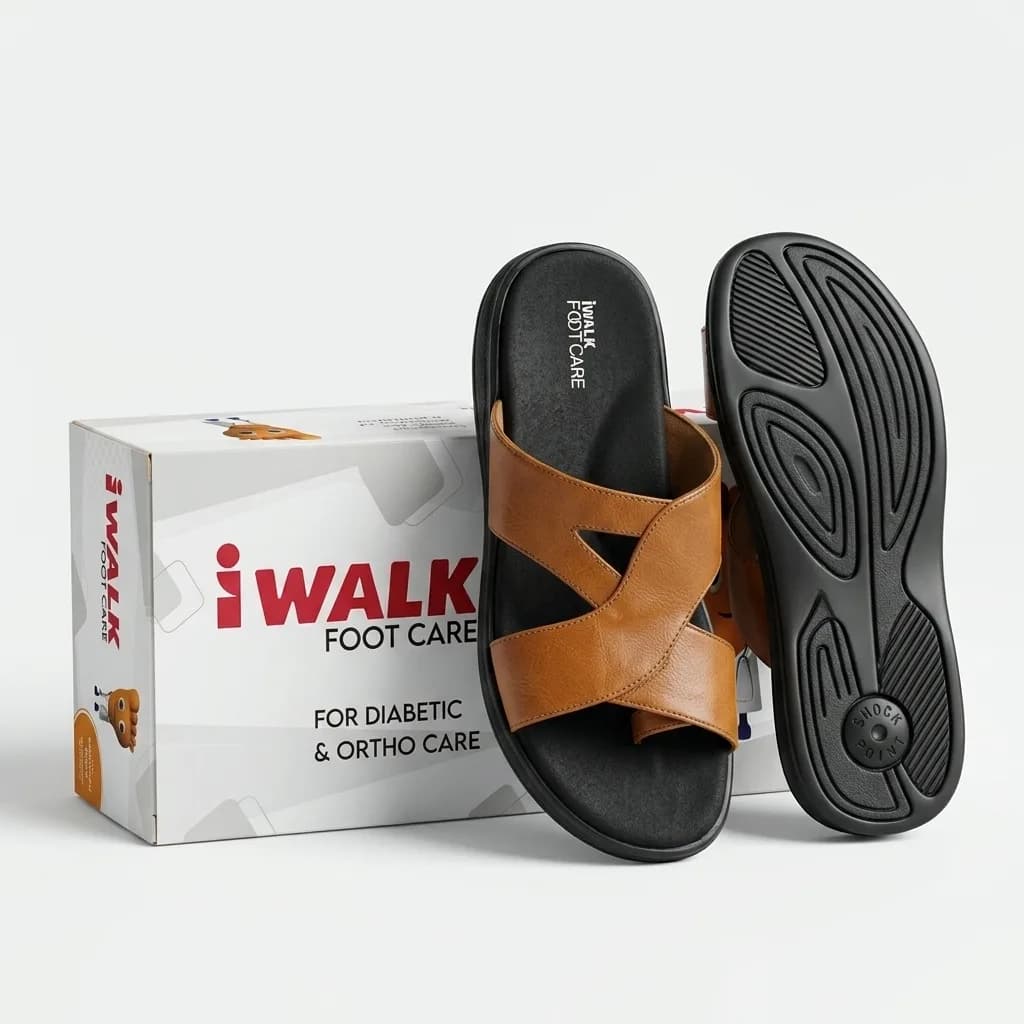
- AJM 05 — ₹1,550. A cross-band diabetic slide that spreads gently across the foot instead of pressing on one strap.
- AJL 430 — ₹700. A light, cushioned flip-flop for women.
- AJL 510 — ₹1,050. A buckle-strap sandal for women with a Micro Touch upper and an arch-support MCP footbed.
If your parent has diabetes, choose a slide or a strap design with a soft lining (the AJM 05 is a good example) and read slippers for diabetic patients.
A thong-style flip-flop (AJM 810, AJM 800, AJL 430) suits those who walk steadily and have good feeling between the toes. If your parent shuffles, has neuropathy or is unsteady, choose the secure strap or cross-band designs.
Make the home safer, too
Footwear is only part of fall prevention:
- Keep floors dry — wipe up spills and use a non-slip mat in the bathroom.
- Improve lighting, especially on the way to the toilet at night.
- Remove loose rugs and clutter.
- Install grab bars in the bathroom and beside steps.
- Encourage gentle exercise to maintain strength and balance. Our home physiotherapy service in Chennai offers geriatric care and balance training.
- Check vision and medicines with the doctor — some medications cause dizziness.
Fitting and care tips
- Measure the foot in the evening and leave a thumb's width at the toe. See how to measure foot size.
- Wipe soles clean so grit does not reduce grip.
- Replace when the tread wears smooth or the footbed flattens — see when to replace orthopedic footwear.
- Keep one pair beside the bed so they never step on the floor barefoot at night.
Buying for your parents? WhatsApp us their foot length, whether they have diabetes or swelling and how steadily they walk, and we'll suggest a safe pair. Read also our gift guide for parents. Cash on Delivery for eligible orders.