If you or someone at home has diabetes, the slippers you wear indoors matter just as much as your outdoor shoes. Most of us step out of bed, walk to the kitchen and potter around the house in whatever chappal is near the door — and for a diabetic foot, that is where small injuries often begin.
Diabetes can reduce feeling in the feet (neuropathy) and slow healing. A thin, hard or badly fitting slipper can rub, pinch or press a spot for hours without you feeling it. Over days, that can become a blister, a sore or, in the worst case, an ulcer. This guide explains what makes a slipper safe for a diabetic foot, what to avoid, and which options we stock.
Why ordinary chappals are risky for diabetic feet
The classic rubber or foam hawai chappal looks harmless, but it has three problems for sensitive feet:
- A thin, hard sole. There is almost no cushioning, so pressure goes straight into the heel and ball of the foot.
- A toe-post that rubs. The thong sits between the big toe and the second toe and can cause friction sores that go unnoticed when sensation is reduced.
- No fit adjustment. Feet change size through the day, especially if there is swelling, and a loose slipper makes you grip with your toes.
Read more about the nerve changes behind this in our guide to diabetic neuropathy and foot care.
7 things to look for in diabetic slippers
- A cushioned, pressure-spreading footbed. iWALK's MCP footbed is designed to even out pressure across the sole instead of letting it concentrate on one spot. See MCR vs MCP footwear for how it differs from ordinary rubber.
- A soft, seamless inner lining. Run your fingers inside — you should not feel rough stitching or hard edges.
- A roomy toe area. Cramped toes are a common cause of corns and sores.
- A gentle upper that does not squeeze. Soft Micro Touch uppers reduce friction on sensitive skin.
- A secure, adjustable fit such as a strap or a cross-band, so the slipper stays put without gripping.
- A non-slip sole, especially on tile and bathroom floors.
- Light weight. Heavy slippers tire the legs and change the way you walk.
Which iWALK slipper suits which person?
| Model | Style | Price | Best for |
|---|---|---|---|
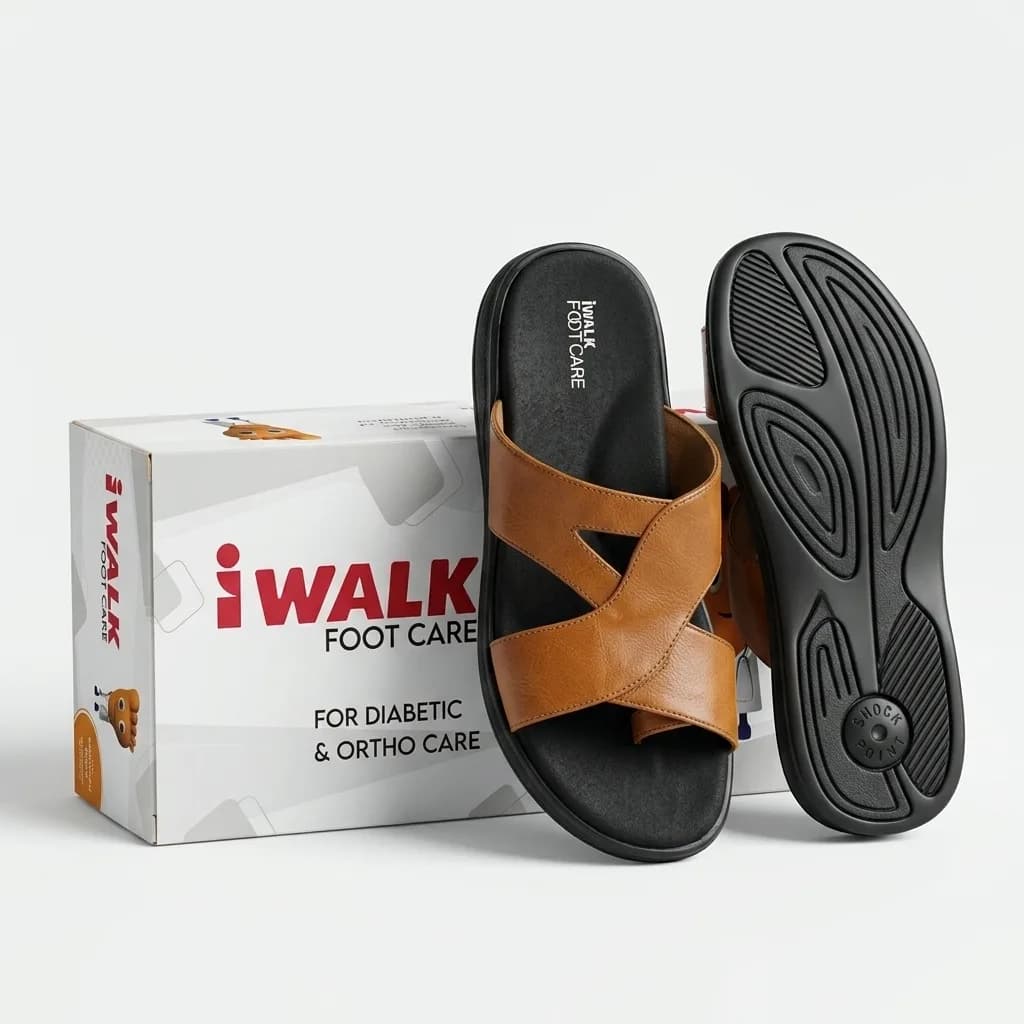
| AJM 05 | Cross-band diabetic slide | ₹1,550 | Men who want a no-toe-post slide for home and quick errands |
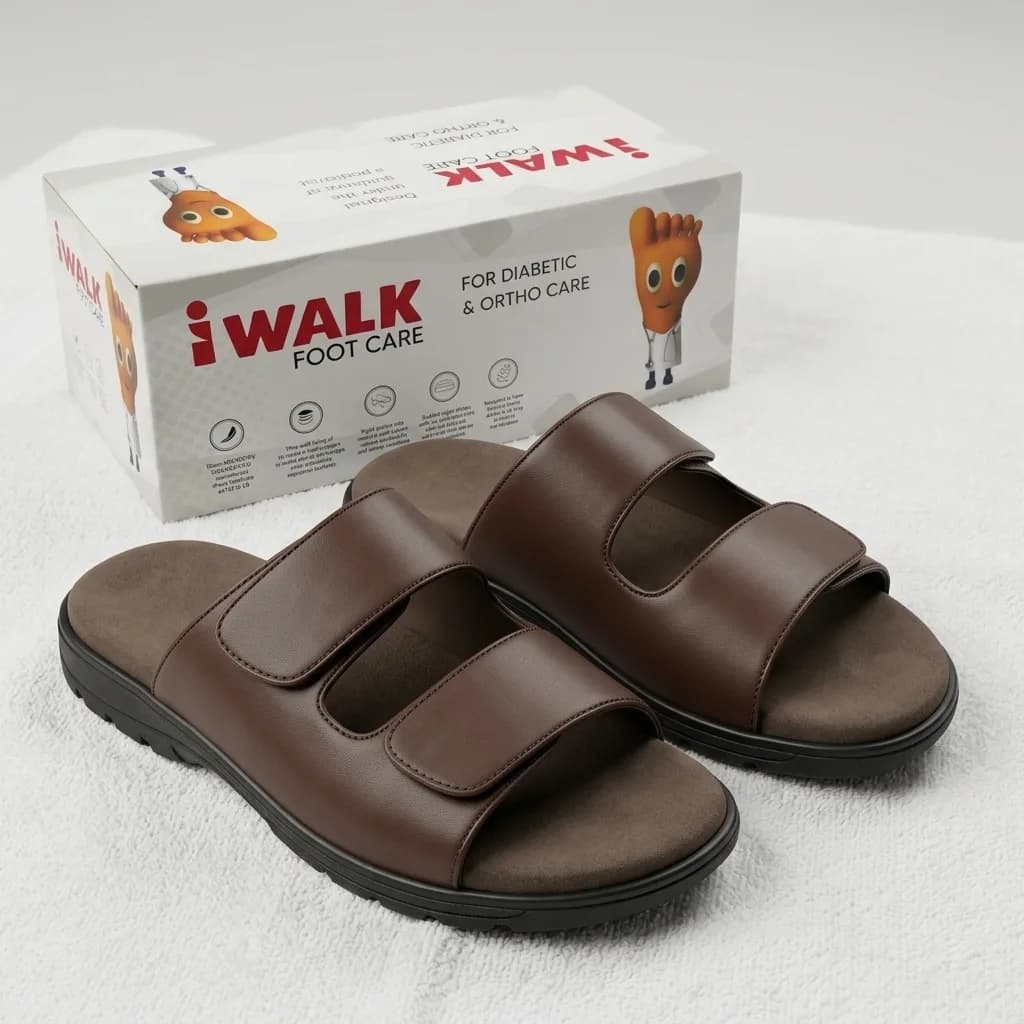
| AJM 08 | Slip-on diabetic sandal | ₹1,550 | Men with neuropathy who want a friction-free upper |
| AJM 02 | Thong-style diabetic slipper | ₹1,550 | Men who are used to a thong style and have good sensation between the toes |
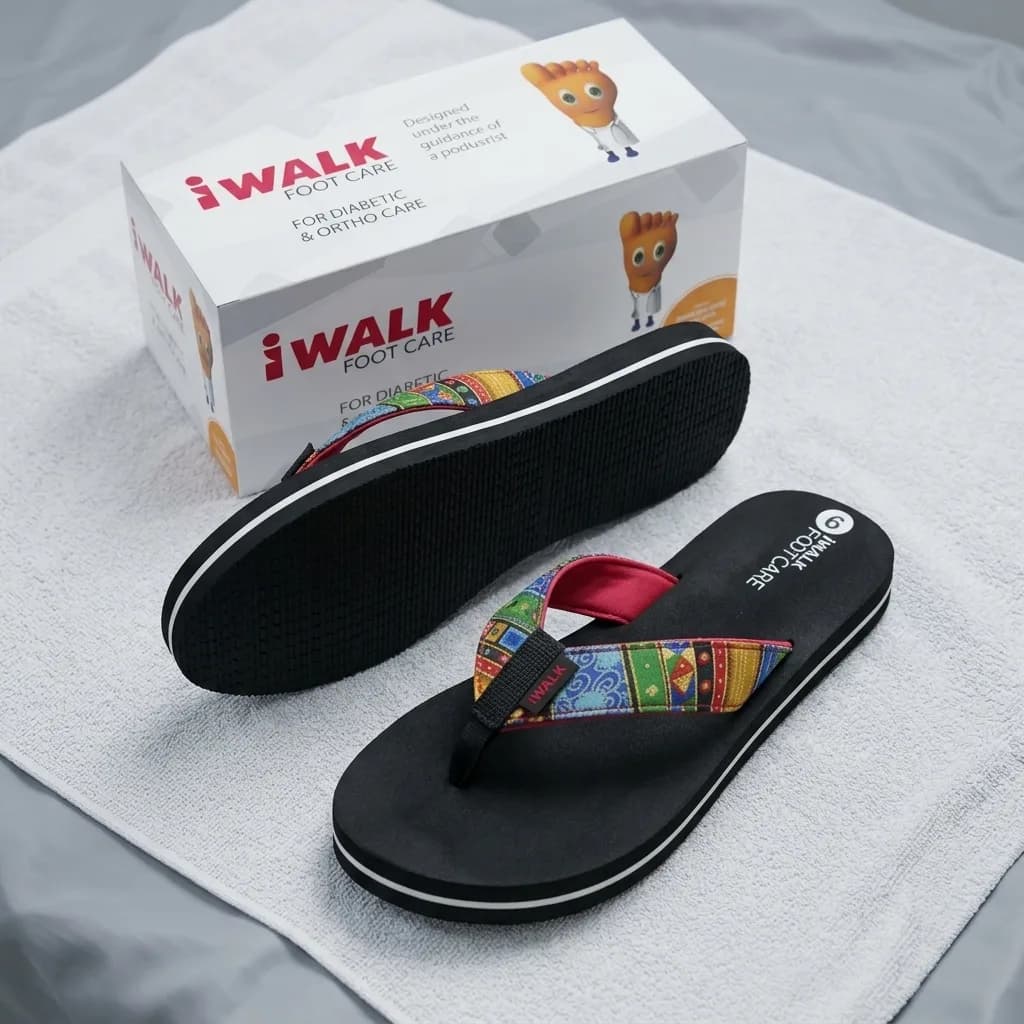
| AJL 430 | Cushioned flip-flop | ₹700 | Women who want a light, affordable indoor slipper |
| AJL Majestic | Diabetic sandal | ₹1,975 | Women who want a soft diabetic sandal with a cushioned footbed |
A quick note on the thong style: if you already have numbness between the toes, choose a slide or a closed-strap design (such as the AJM 05 or AJM 08) rather than a toe-post slipper, and check between your toes every day.
How to wear and check your slippers
- Never walk barefoot, even inside the house. A pin, a thorn or a hot floor can injure a foot that cannot feel.
- Check the inside of each slipper before putting it on — a small stone or a rough patch can hurt.
- Look at your feet every evening for redness, blisters or cuts. Use a mirror for the soles. Our daily diabetic foot care checklist takes two minutes.
- Replace worn pairs. When the footbed flattens or the sole wears smooth, the protection is gone — see when to replace orthopedic footwear.
- Have separate pairs for indoors and outdoors so dirt and moisture do not build up.
Getting the size right
Measure your feet in the evening, when they are slightly bigger. Choose a size that leaves a thumb's width in front of the longest toe and does not press on the sides. If you are between sizes or have swelling, go up and use an adjustable strap. Our foot measuring guide shows exactly how.
Not sure which pair or size? WhatsApp us your foot length and whether you have diabetes, swelling or numbness — we'll suggest the right slipper. We deliver across Tamil Nadu and India, with Cash on Delivery for eligible orders.
Key takeaways
- A diabetic slipper should be soft, seamless, roomy, adjustable and non-slip.
- Avoid thin hard chappals and, if you have numbness, toe-post designs.
- Never go barefoot, and check your feet and slippers every day.
- Browse diabetic-friendly men's and women's footwear, or see a doctor if you notice any wound that does not heal.