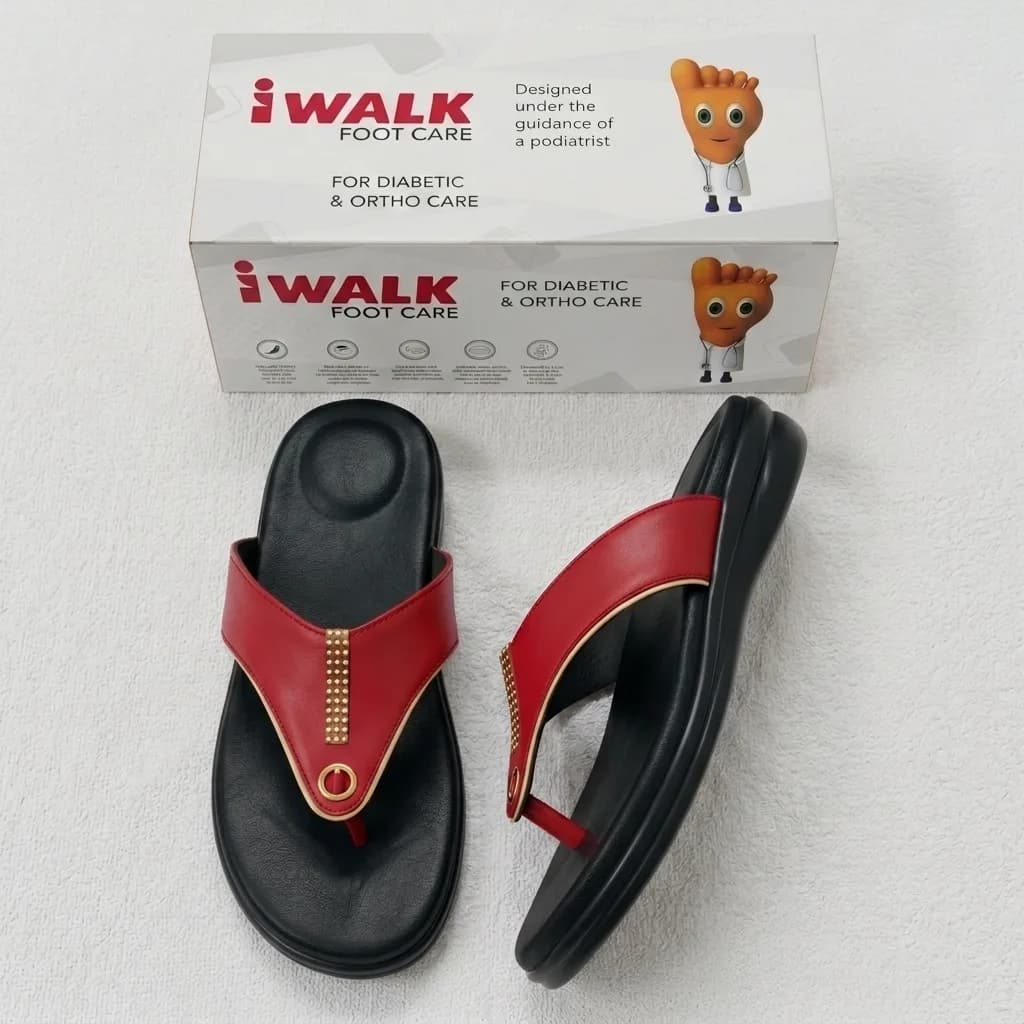
Your ankle is the hinge between your foot and your leg, and it absorbs a lot of strain. When it hurts — after an old sprain, from arthritis, because of weak ligaments or flat feet — every uneven step can be a worry. The right footwear for ankle pain will not replace treatment, but it can steady the joint, cushion the impact and reduce the twisting that causes flare-ups.
Common causes of ankle pain when walking
| Cause | What it feels like |
|---|---|
| Old sprain or weak ligaments | Instability, "giving way", pain on uneven ground |
| Arthritis (osteoarthritis, rheumatoid, gout) | Stiffness, swelling, pain worse in the morning |
| Tendon problems (Achilles, peroneal) | Pain at the back or outer ankle with activity |
| Flat feet or overpronation | Inner ankle ache, fatigue with walking |
| Swelling (oedema) | Tight, puffy ankles by evening |
| Footwear problems | Pain after wearing high heels, thin chappals or worn shoes |
Related reading: footwear for arthritis foot and ankle pain, flat feet and arch support and gout and uric acid footwear.
How footwear helps the ankle
- Stable base. A wider, flatter sole reduces wobble. High or narrow heels tilt the ankle and increase sprain risk.
- A secure fit. When the heel and midfoot are held firmly, the foot moves less inside the shoe.
- Cushioning. A shock-absorbing sole lessens the impact travelling through the joint.
- Arch support. Keeps the foot from rolling inwards, easing strain on the inner ankle.
- Room for swelling. Adjustable straps let you loosen the fit when ankles puff up.
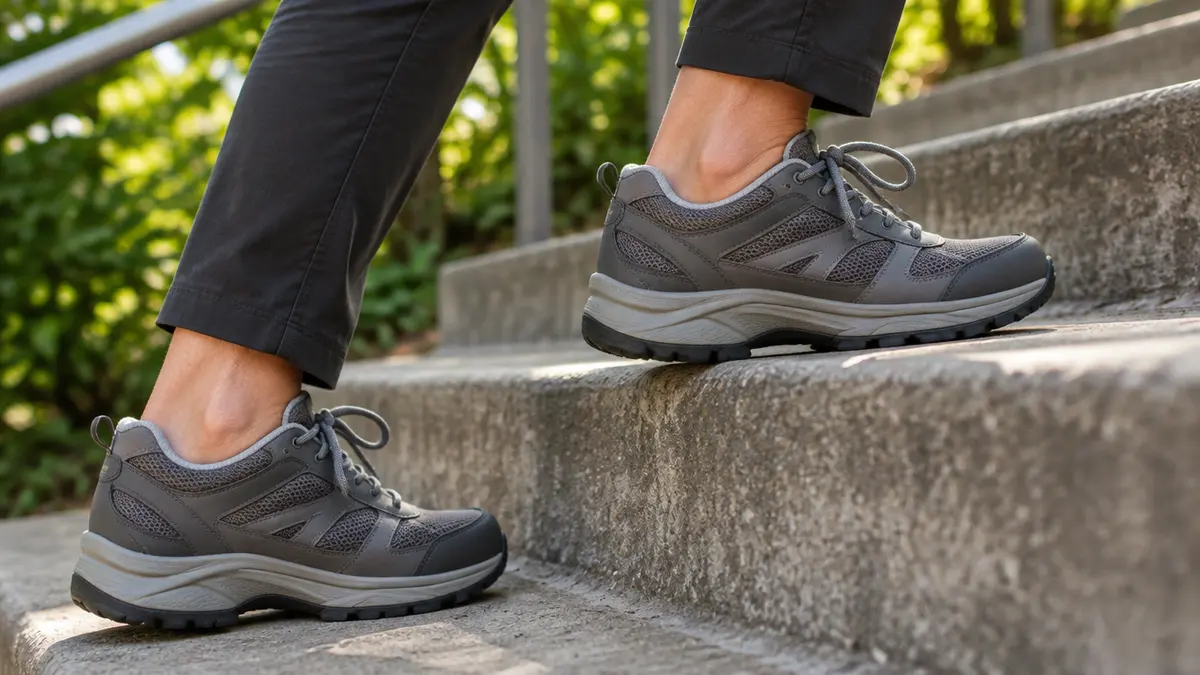
What to look for
- A firm, stable sole that does not twist easily.
- A snug heel that doesn't slide up and down.
- A cushioned, supportive footbed.
- An adjustable closure — straps or buckles — or a well-fitting slip-on.
- A soft upper with no rough seams near the ankle bones.
- A non-slip sole for confidence on wet or uneven ground.
What to avoid
- High heels and wedges, which put the ankle in an unstable position.
- Flimsy flip-flops with no heel hold that force you to grip with your toes.
- Thin, worn-out soles.
- Shoes that are too tight around the ankle or instep.
- Walking barefoot on uneven ground.
Footwear we recommend
- iWALK Men's Walking Shoe and Women's Walking Shoe — ₹3,900 each. Closed slip-on shoes with a breathable knit upper, a cushioned footbed and a shock-proof rubber sole; the enclosed shape holds the foot steadily.
- AJM Walker — ₹1,650. A men's orthopedic sandal with adjustable straps and an arch-support MCP footbed for walking and standing.
- AJL Barmi Heel Soft — ₹1,580. A women's heel-soft sandal with an arch-support MCP footbed that cushions each step.
- AJM 12 — ₹1,580. An adjustable two-strap sandal with a wide toe box that can be loosened when ankles swell.
Explore the full range for men and women, or see our orthopedic footwear for men and for women guides.
Everyday tips for ankle pain
- Warm up and stretch gently before walking — ankle circles and calf stretches.
- Strengthen the ankle with balance and resistance exercises taught by a physiotherapist. We offer home physiotherapy in Chennai, including rehabilitation after sprains and fractures — see also footwear after foot surgery or fracture.
- Avoid sudden increases in walking distance.
- Elevate swollen ankles in the evening.
- Replace worn shoes — see when to replace orthopedic footwear.
- Use uneven ground carefully and keep floors free of clutter.
When to see a doctor
Get medical help if:
- You cannot put weight on the ankle or it looks deformed.
- There is significant swelling, bruising, redness or warmth.
- Pain follows an injury and does not improve within a few days.
- The ankle repeatedly gives way.
- You have diabetes, numbness or a wound.
Weak or painful ankles? WhatsApp us your daily routine and shoe size and we'll suggest supportive footwear. We deliver across Tamil Nadu and India, with Cash on Delivery for eligible orders.
Key takeaways
- Choose stable, cushioned, snug and adjustable footwear for ankle pain.
- Avoid high heels, flimsy flip-flops and worn soles.
- Combine good shoes with stretching, strengthening and medical advice. Browse the full range at the shop.